.svg)

Let's Get in the Ant's Business

Let's Get in the Ant's Business
If you’ve started seeing ants around your home recently, you are definitely not alone. Late spring and early summer are some of the busiest times of the year for ant activity, and this is usually when homeowners begin noticing them in kitchens, bathrooms, garages, and around entry points.
And somehow… They always seem to show up with confidence like they own the place.
But why is this happening right now, and why do ants seem so difficult to fully get rid of?
Let’s get into it.
Why Am I Seeing Ants Right Now?
This time of year is exactly when ants become most active. During colder months, ants stay hidden in protected areas to survive the winter. Once temperatures begin warming up, worker ants head out searching for food and water to support the colony and help it continue growing.
Fun fact: the ants you usually see walking around your home are worker ants. Their entire job is to search for resources and bring food back to the colony while the queen and developing ants stay protected inside the nest.
Warmer weather also speeds up ant activity, which is why it can suddenly feel like ants appeared overnight once spring and summer roll around.
Where Will I See Them?
The two biggest hotspots homeowners usually notice are kitchens and bathrooms.
Kitchens
Ants are constantly searching for food, especially sugary foods, crumbs, grease, pet food, and trash. Once one worker ant finds a reliable food source, it leaves behind a pheromone trail for the rest of the colony to follow.
That’s why you may start by seeing one ant… and then suddenly there are twenty more walking across your countertop like they pay the bills.
Pantries, countertops, sinks, trash cans, and even pet food bowls can all attract ant activity during this time of year.
Bathrooms
Bathrooms are another common place ants show up because they also need moisture and water sources to survive. Leaky pipes, damp areas, sinks, tubs, and condensation can all attract ants looking for hydration.
Even small amounts of standing water can be enough to keep them coming back.
Why Is It So Hard to Get Rid of Them?
One of the biggest reasons ants are difficult to eliminate is because most DIY products only target the ants you can actually see.
Ant colonies are extremely organized and efficient. Ants communicate through pheromones, which help them alert each other to food sources, danger, and changes in their environment.
When homeowners use over-the-counter sprays, it may temporarily reduce the visible activity, but in many cases the colony itself is still nearby. Certain species may even avoid treated areas, relocate portions of the colony, or begin searching for food somewhere else around the home.
This is why ant problems often feel like a constant cycle:
You stop seeing them for a little while… then suddenly they’re back again a few weeks or months later.
Ants have survived for millions of years for a reason. They are incredibly adaptable.
How Does Spidexx Handle This?
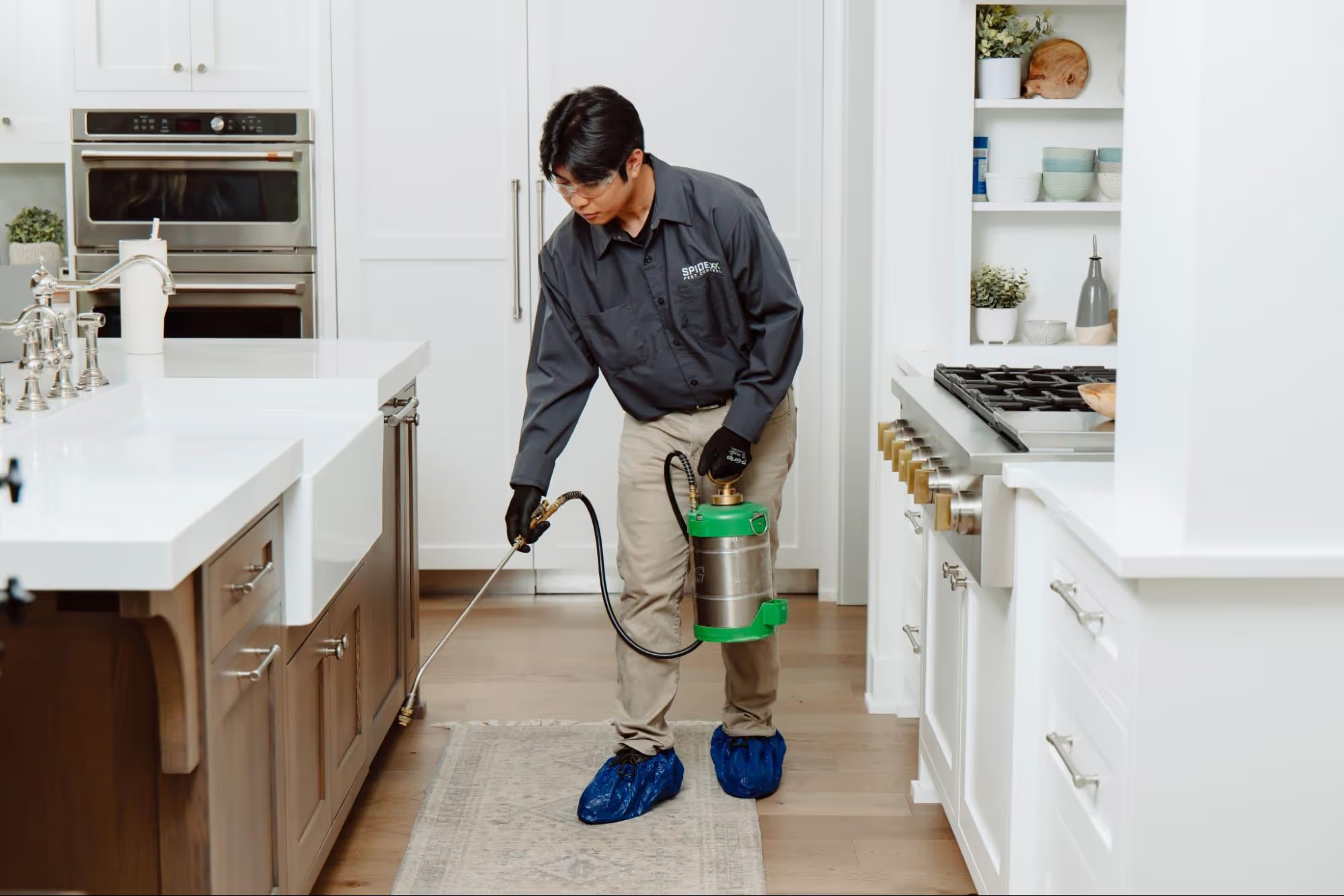
At Spidexx, we start with a full inspection to identify what may be attracting the ants in the first place. This can include food sources, moisture issues, entry points, organic debris, or nesting areas around the property.
From there, our technicians create a treatment plan based on the type of ant activity they are seeing.
One of the most effective tools for many species is professional baiting methods. Worker ants are attracted to the bait and carry it back to the colony, where it is shared with other ants, including the queen and developing ants.
Because professional bait products are designed to work gradually, the ants continue interacting with the colony before the treatment fully takes effect. This helps target the colony more effectively instead of simply eliminating the ants you happen to see on the surface.
Depending on the size and location of the colony, this process can take several days, which is completely normal.
That’s also why Spidexx offers warranty-backed service. If ant activity continues after treatment, customers can always give us a call, text, or email and we’ll come back out for a complimentary retreatment according to the service agreement.
What About Fall and Winter?
This is one of the biggest reasons ongoing pest service can make such a difference with ants.
Even when ants stop actively coming inside, many colonies are still living nearby outdoors. As seasons change and temperatures fluctuate, ants continue searching for warmth, food, and water sources.
Routine maintenance allows technicians to monitor activity year-round, identify changing conditions around the property, and proactively treat areas before activity increases again.
Without ongoing maintenance, ants often return once conditions become favorable again and the cycle starts all over.
FUN FACT: ANT COLONIES CAN GO TO WAR
Did you know some ant species are actually extremely territorial and aggressive toward other ant colonies?
Certain species, such as fire ants, Argentine ants, and pavement ants, are known to fight other colonies when competing for food, territory, or nesting areas. These battles can involve hundreds or even thousands of ants at once and are triggered through chemical communication called pheromones.
When ants detect another colony nearby, they may send alarm pheromones signaling workers to defend their territory. In some situations, competing colonies will continuously battle until one colony is forced to relocate or loses access to resources.
This is another reason why professional inspections are so important. Different ant species behave very differently, and treatment methods can vary depending on the species involved. Some ants are more aggressive, some split colonies when disturbed, and others require very specific baiting strategies to effectively address the activity.
While it is not very common to have multiple competing ant species actively infesting the same area inside a home, it can happen around properties or outdoor nesting areas. Having a trained professional inspect the activity can help identify exactly what type of ants are present and determine the best approach based on their behavior, nesting habits, and level of activity.


%20(13).avif)
.avif)
%20(3).avif)